



Trailer

Slam

1998Movie1 h 44 minR

61
DecentGoodWatch score

A moving, violent drama movie about everyday modern life and society.

Good for friends night · teens · drop-in friendly

Where to watch

Fingerprint

Not for laughs, warmth or comfort.

Movies with

Story

Words make sense of a world that won't.

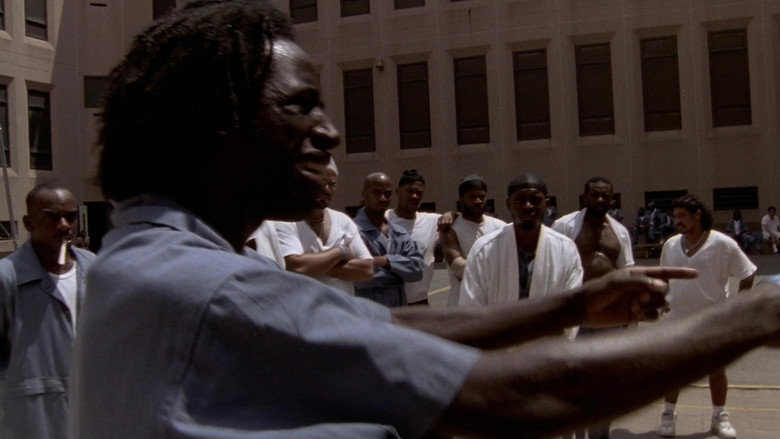
Raymond Joshua, a young black performance poet, is arrested and imprisoned for a petty marijuana charge in a Washington, D.C. jail. Although the confining prison walls do little to shield him from danger, it is within those walls that Raymond establishes his identity, strength, and voice and meets a prison gang leader and a prison writing teacher, Lauren Bell. Bell inspires Raymond to use the power of creative expression to free himself from the struggles and demise of the Black male as another victim of the judicial system.

Feels like

  • Urban Drama
  • Prison Life
  • Performance Poetry
  • Social Justice
  • Black Male Experience
  • Inner-City Struggles
  • Redemption Through Art
  • Realistic
  • Powerful Dialogue

Cast

Crew

Directed by
Marc Levin
Music by
DJ Spooky

Everyone

Pick a department, or search for a name or a job (“editor”, “stunt”).

Facts

October 7, 1998 · 1 h 44 min · R

Released
October 7, 1998
Runtime
1 h 44 min
Age rating
R
Content
Violence, Strong Language, Drug Use
Genres
Drama
Original language
English
Made in
United States
Available in
7 countries

Q&A

3 questions, like "Where can I stream Slam?"

Questions about Slam

Quick answers from GoodWatch data.

Where can I stream Slam?

In the United States, Slam streams on Kino Film Collection, and it is free with ads on Kanopy, Hoopla, and Plex. You can rent or buy it from Apple TV Store, Google Play Movies, YouTube, and Fandango At Home. It also streams in 1 other country.

Is Slam worth watching?

61
DecentGoodWatch score

Opinions are mixed, with a GoodWatch score of 61 (IMDb 7.1, Rotten Tomatoes 60%, and Metacritic 73). Audiences rate it higher (79 out of 100) than critics (67).

Is Slam plot-driven or character-driven?

CharactersPlot

Mostly character-driven: it leans on dialogue centrality (9 of 10) and character depth (8 of 10) more than on its plot.