
Juno and the Paycock

1930Movie1 h 34 min

30
BadGoodWatch score

A profoundly sad, moving drama movie about history and family.

Good for friends night · teens · drop-in friendly

Skip it if you need an uplifting mood

Where to watch

Set your services

Fingerprint

Not for warmth, comfort or laughs.

Movies with

Story

The "Over-The-Hill" of the Talkies.

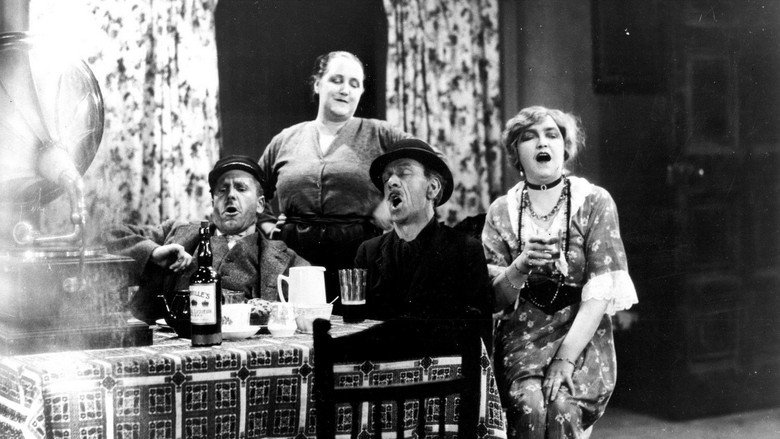
In the slums of Dublin during the Irish Civil War, the Boyle family’s fragile stability collapses after news of an unexpected inheritance lures them into a false sense of prosperity. Captain Boyle, a boastful idler, squanders their meager resources, while his wife Juno holds the household together. When the fortune proves illusory, the family faces ruin, betrayal, and tragedy.

Feels like

  • Irish Revolution
  • Family Tragedy
  • Social Commentary
  • Classic Play Adaptation
  • Loss of Innocence
  • Early Cinema
  • Melancholy
  • Class Struggle

Cast

Crew

Directed by
Alfred Hitchcock
Produced by
John Maxwell

Everyone

Pick a department, or search for a name or a job (“editor”, “stunt”).

Facts

June 29, 1930 · 1 h 34 min · Violence

Released
June 29, 1930
Runtime
1 h 34 min
Content
Violence
Genres
Drama
Original language
English
Made in
United Kingdom
Available in
137 countries

Q&A

4 questions, like "Where can I stream Juno and the Paycock?"

Questions about Juno and the Paycock

Quick answers from GoodWatch data.

Where can I stream Juno and the Paycock?

In the United States, Juno and the Paycock streams on Artiflix, and it is free with ads on Plex. You can rent or buy it from Apple TV Store. It also streams in 136 other countries.

Is Juno and the Paycock worth watching?

30
BadGoodWatch score

Reviews are weak, with a GoodWatch score of 30 (IMDb 4.6, Rotten Tomatoes 30%, and Metacritic 40).

Will I feel good after watching Juno and the Paycock?

BleakHopeful

Probably not: the title analysis rates it 9 of 10 for melancholy and 8 for bleakness, against 2 for hopefulness.

Is Juno and the Paycock plot-driven or character-driven?

CharactersPlot

Mostly character-driven: it leans on character depth (8 of 10) and pathos (8 of 10) more than on its plot.